
Nov
2026
Strep Throat in Toddlers is a throat infection resulting from group A strep germs, and it rarely manifests itself like it would in older children. School-age children will be able to complain about throat pain, while toddlers will only present with a fever, irritability, and pushing away their cup of milk, which they normally drink in seconds. This disease is not very frequent among toddlers, but it can occur. It differs from a viral illness in the need for a swab and antibiotics.
Is Strep Throat Common in Toddlers?
Not really. Strep infects mostly school-going children and is quite common between ages five and fifteen years old. Infections of the throat among children who are under three years old will usually be viral infections like the common cold, hand, foot and mouth disease, or adenovirus infection. No need for medication here.
That said, toddlers do have the ability to contract strep. The chance of getting it increases if you send your toddler to daycare or he has an older sibling at school who has brought home a sore throat. It can spread by sneezing, coughing, and the use of same sippy cup. Usually, this occurs from fall to spring. Since it is less anticipated in toddlers, it tends to go undetected, making it all the more important for your doctor to check for it.
What Are the Signs of Strep Throat in Toddlers?
Since toddlers cannot describe what they feel, parents will most likely notice that something is wrong. Fever is usually one of the initial symptoms and it is normally 101°F or higher. In addition, your child may lose appetite. Toddlers may also whine or cry whenever they swallow food or they may drool excessively.
Enlarged and swollen glands in the neck are also one of the symptoms. In addition, your toddler may have bad breath, red throat (often covered with white patches) and he/she may become unusually clingy. Some toddlers may have stomach pains and vomiting.
Sometimes, children will develop a fine and sandpaper-like pink rash on the skin of their neck and chest. It is known as scarlet fever and although it sounds quite terrifying, it is nothing but a strep with a rash.
Strep usually doesn't cause a runny nose or cough, so if those are the main symptoms, a virus is more likely. However, children tend to break all the rules, so you should not exclude strep from possible diagnosis based only on symptoms.
How Is Strep Throat in Toddlers Diagnosed and Treated?
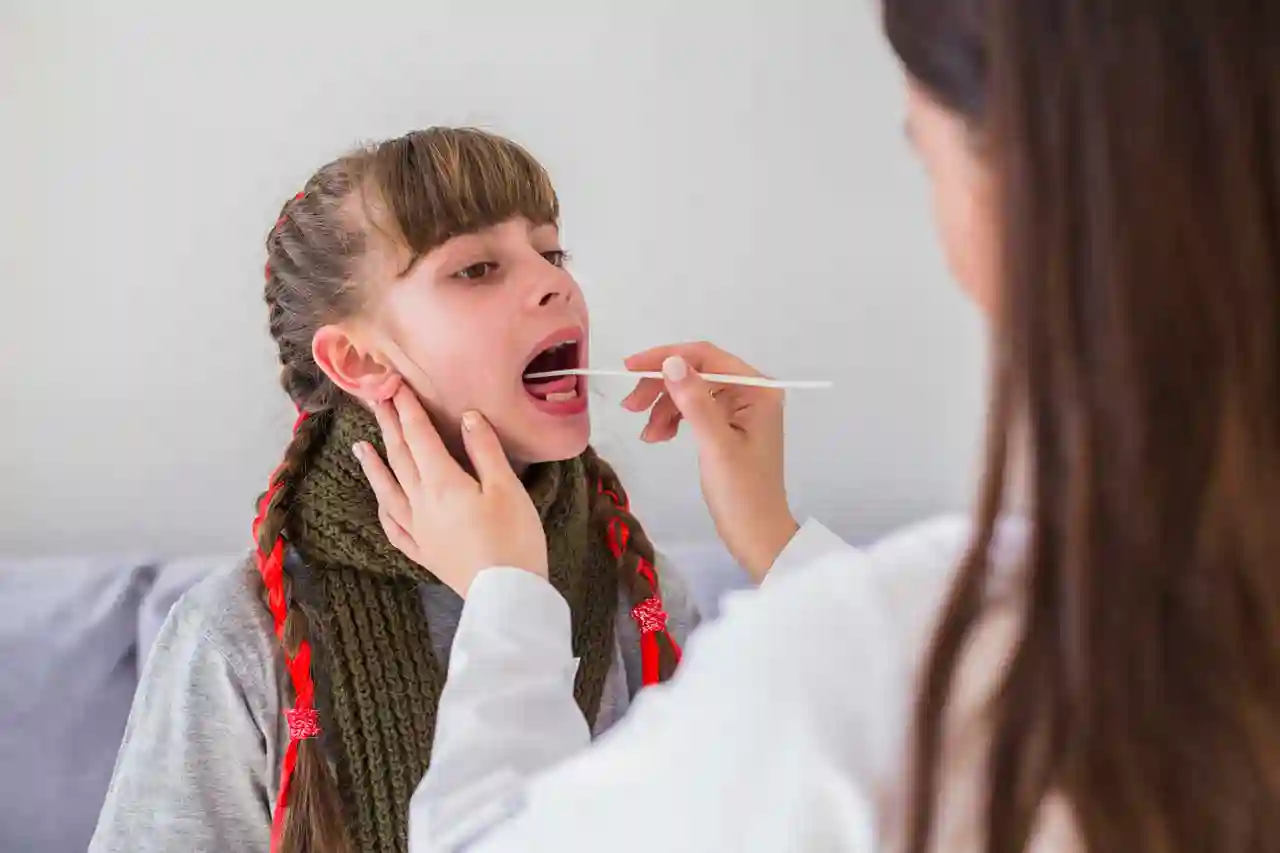
Physicians cannot identify a strep infection simply by examining a child's throat. Qualified pediatricians may also struggle to distinguish between viral and bacterial causes. A doctor will often complete a fast screen test which involves a quick throat swab and provides immediate results. Should the initial test prove negative, but the doctor still feels that a child may have a strep infection then a throat swab can be taken for laboratory culture. This process takes 1-2 days and is used to detect those infections that were not identified by the fast screen.
While doctors tend to be careful when deciding whether to test a toddler, as toddlers rarely suffer from a strep infection, confirmation that another child in the family has infection or symptoms such as a persistent fever and enlarged lymph nodes will often assist in this decision.
If your child has a positive result then they will be given antibiotics (most often amoxicillin or penicillin) for approximately 10 days. Antibiotics can be administered in liquid form and a child often enjoys using their favorite spoon. Dosage is calculated according to your child's weight so do not re-use liquid antibiotics that have been stored in the fridge.
While children often appear and feel well from day 3/4, it can be difficult to ensure they complete their antibiotics. If they do not, then the bacteria may not be fully eradicated. In a small number of cases this may even lead to further problems such as rheumatic fever. Speak to your doctor to establish which pain reliever is suitable for your child's age and weight. Never administer aspirin to children.
How Long Does Strep Throat Last, and How Long Is It Contagious in Toddlers?
Children usually begin to improve within 24-48 hours of antibiotic therapy. Fever should come down, irritability will decrease and a desire to eat should re-emerge. Untreated, a strep infection will typically persist for around a week. Children can remain infectious for 2-3 weeks.
With antibiotic treatment, the infectious period soon reduces. Generally, if a child has been on antibiotics for 12 to 24 hours and their fever has gone then they are no longer thought to be infectious. However, most daycare and preschools insist that a child is well (no fever) for a full day before allowing them to re-attend. Policies may differ so please confirm the requirements at your child's center.
Generally, the first couple of days are key. From day 4/5 most children are returning to their normal levels of activity and are keen to eat. Despite this, antibiotic treatment must still be completed for around 10 days.
After a day or two of antibiotics, it is also wise to change your toddler's toothbrush. Furthermore, ensure that communal cups and cutlery are heavily cleaned in order to further reduce transmission of infection.
When Should I Worry About My Toddler's Sore Throat?
Although most sore throats are not serious, contact your child's pediatrician if they develop a fever which persists for more than 2 or 3 days, are reluctant to drink, or display symptoms of dehydration (for example, dry mouth, no tears when crying and/or no wet diaper for 8 hours). Contact your pediatrician if your child does not improve on antibiotics within 2 days, develops a rough rash, or suffers from intense earache and/or a swollen, red joint following a strep infection.
When to Go to the Emergency Room
Seek emergency medical help if your child is having breathing difficulties, has a 'hot potato' sounding voice, cannot swallow and is drooling. Or if they have a stiff neck or appear floppy and/or drowsy. These may indicate that your child has developed an abscess in their throat and/or is experiencing airway swelling. Also, contact a doctor immediately if your baby (under 3 months) has a fever.
As parents you know your child best. It is always appropriate to seek medical advice if you have any concerns.
Comfort Care for Toddlers at Home
Medicine does the main work, but self care can also be effective. Foods that are both cold and moist (such as yogurt, applesauce, smoothies and popsicles) are easier to swallow if you have a sore throat. Sipping regularly will also help. Using a cool mist humidifier may be of benefit during sleep. Good rest is also important. Honey can ease a child's cough (for those aged 12 months and above), however, do not administer honey to babies.
Good hand hygiene is important in preventing the spread of strep. People should also avoid sharing drinks and bottles. Anyone displaying symptoms should also be tested.
Finding the Best Pediatrician in McKinney and Frisco for Your Child
When your toddler loses their appetite and runs a fever, you want trusted care without a long wait. Many local parents search for the best pediatrician in McKinney or the best pediatricians in Frisco. Choose a practice which offers same-day sick visits, on-site fast strep testing and a team that explains things clearly.
As your child's regular pediatrician will already be familiar with their medical background, they are often better at deciding straight away if the cause of your child's fever is viral or bacterial. They can then monitor your child's progress if there is no improvement. When searching for children's doctors in McKinney, ask how soon you can be seen when your child is unwell especially during peak strep times.
At Kids Klinic, our team can test for strep and guide you on next steps. If your toddler has a fever or a sore throat, call or book an appointment so they can start feeling better soon.