
Dec
2025
Fiber-rich foods are plant-based high dietary foods that help in healthy digestion , lowers cholesterol, and promotes overall health. Foods, especially those designed for children, help to increase nutrient intake and add additional daily nutrition to each child's diet. With this detailing, Kids Klinic helps you to understand what is fiber and fiber-rich food, different types of fiber-rich foods, its benefits and more.
Understanding What Is Fiber?
Fiber refers to a form of carbohydrate that is not absorbed in the body, as it is primarily eliminated through the digestive process without being digested.
Fiber can be categorized into two types:
- Soluble fiber that can dissolve in water and create a gel-like substance, and
- Insoluble fiber that promotes proper bowel movement.
Soluble fibre is particularly helpful in regulating blood sugar levels by slowing down the absorption of glucose into the bloodstream, while insoluble fiber helps prevent constipation by promoting the formation of solid stools. Together, these two forms of Fiber contribute to maintaining healthy digestion and overall gastrointestinal health.
Generally, Adults need about 25 to 30 grams of fiber each day. Research indicates that high-fiber diets are protective against chronic diseases, including diabetes and elevated cholesterol levels.
Key Benefits of Fiber
Ability to bind cholesterol in the digestive system and promote its elimination from the body prior to being absorbed into the blood stream, fiber lowers cholesterol levels.
According to a research study conducted by Harvard Medical School, increasing daily soluble fiber intake by 10 grams decreases the chance of developing heart disease by 14%.
- Fiber lowers blood sugar levels, avoiding high spikes that cause energy crashes and induces better sugar absorption.
- High amounts of Fiber also help with body weight control.
- Fiber also helps with constipation and build healthy gut bacteria by supporting the growth of the good bacteria.
Fiber For Different Age Groups
Fiber also provides many benefits through age. For example, children get significant benefits by consuming fiber-rich foods. It strengthens their development and reduces stomach problems that are often seen in picky eaters.
As stated in Healthy Children, a resource from the American Academy of Pediatrics, toddlers need to eat at least 19 grams of fiber daily and should continue to consume higher levels as they grow up, in order for them to maintain active lives.
In Adults, consuming the right amount of fiber helps them to decrease stress and digest food properly, along with providing consistent energy throughout the day
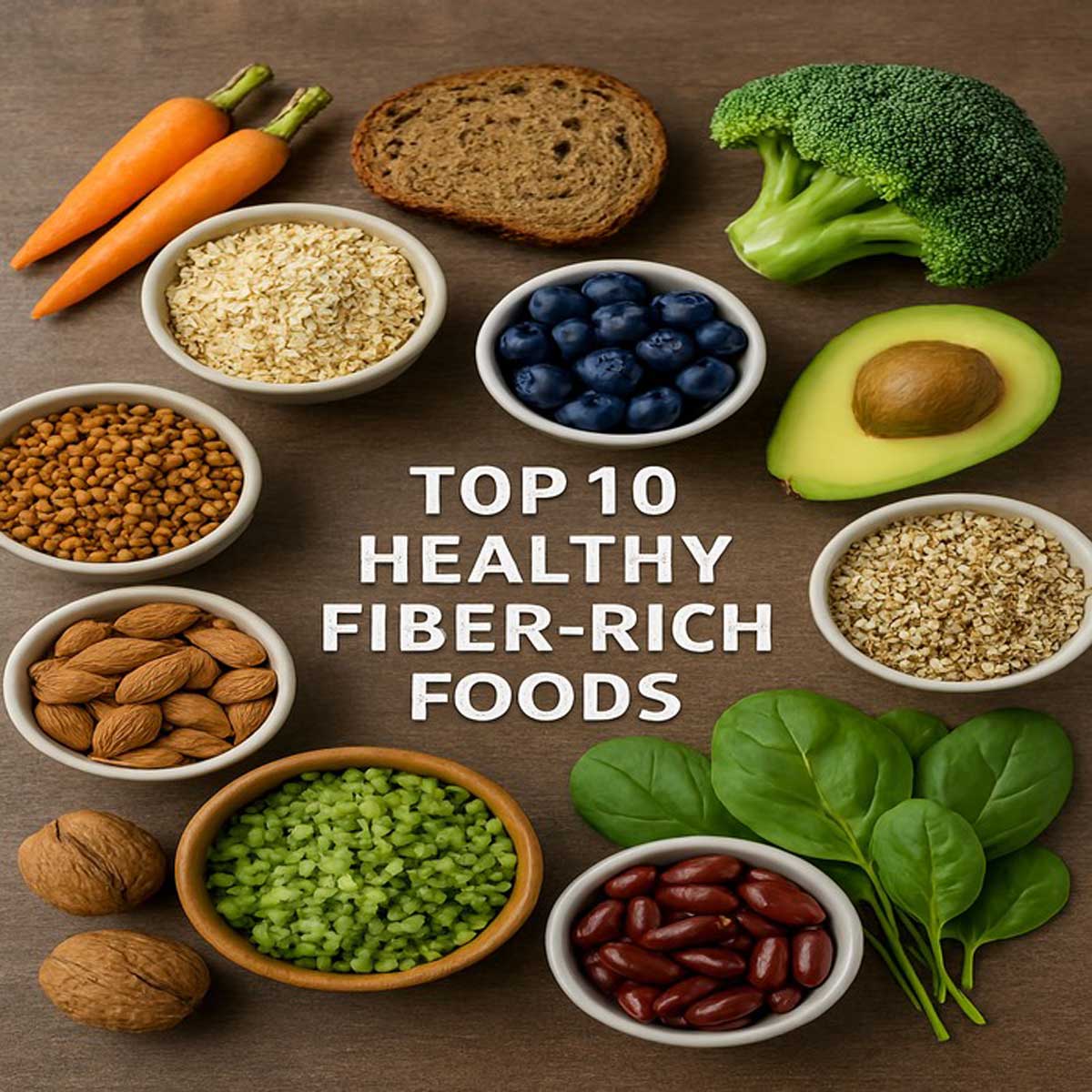
Top 10 Healthy Fiber-Rich Foods:
1. Raspberries
One cup of raspberries consists of 8 grams of fiber, mostly insoluble for smooth digestion. These berries add sweetness to yogurt or oatmeal, making healthy fiber foods fun.
Research shows antioxidants in raspberries cut inflammation too.
2. Pears
A medium pear with skin delivers 5.5 grams of fiber, blending soluble and insoluble types.
Studies say pears help to lower cholesterol absorption.
3. Lentils
Half a cup of cooked lentils offers 7.8 grams of fiber, ideal for soups.
Intake of lentils improves gut bacteria diversity.
4. Chia Seeds
One ounce of chia seeds provides 10 grams of fiber. Sprinkle on smoothies for easy healthy fiber foods.
Chia seeds lowers blood pressure.
5. Apples
A medium apple yields 4.5 grams of fiber, with pectin aiding blood sugar control. Perfect as snacks in fiber-rich foods for kids.
Harvard notes apples support heart health.
6. Broccoli
One cup of cooked broccoli gives 5 grams of fiber and vitamins. Steam it for side dishes using healthy foods for kids.
Studies show broccoli fights oxidative stress.
7. Split Peas
Half a cup of split peas has 8.2 grams of fiber, great in soups. Peas aid steady energy release.
8. Avocado
One medium avocado has 10 grams of fiber with healthy fats. Mash on toast for healthy fiber-rich foods.
Linked to better cholesterol profiles.
9. Oats
One cup of cooked oats contains 4 grams of beta-glucan fiber for cholesterol control.
10. Brussels Sprouts
One cup of cooked brussels sprouts offers 6.4 grams of fiber, roasting well for flavor. Include in meals as healthy fiber foods. Research says brussels sprouts are reducing cancer risk.
Conclusion
These 10 high-fiber foods will significantly improve your health. Raspberries, and lentils help our digestive systems and are a great source of nutrients that promote heart health. Fiber-rich food can provide multiple benefits, which is important to consume regularly. Plan fiber-rich foods along with a regular diet and see the difference in your health improvement.
Try to consult a best pediatrician for a best diet plan for your children and adults.
Frequently Asked Questions
1. How much fiber do kids need daily?
Children aged 1-3 need 19 grams, 4-8 years about 25 grams, adjusting up for teens. Focus on fruits and veggies for fiber-rich foods for kids.
2. Can too much fiber cause problems?
Yes, sudden increases lead to bloating or gas. Add healthy fiber-rich foods gradually and drink plenty of water to ease adjustment.
3. Are fiber supplements better than food?
No, whole healthy fiber foods provide nutrients supplements lack. Prioritize fiber-rich foods for complete benefits.
4. Does cooking reduce fiber in foods?
Some soluble fiber may dissolve, but most stays intact. Eat potatoes and fruits with skins for maximum healthy fiber foods.
5. What if my child refuses fiber-rich foods?
Blend into smoothies or sauces using fiber-rich foods for kids. Make mealtime fun with dips and shapes.