
Jan
2026
When it comes to children, their skin is much more than just a protective barrier; it is a sensitive organ that reacts quickly to the environment, genetics, and hygiene habits. As a parent, seeing a new rash or bump on your child can be stressful.
Understanding the skin issues causes can help you manage and decide when it is time to consult a pediatrician near you.
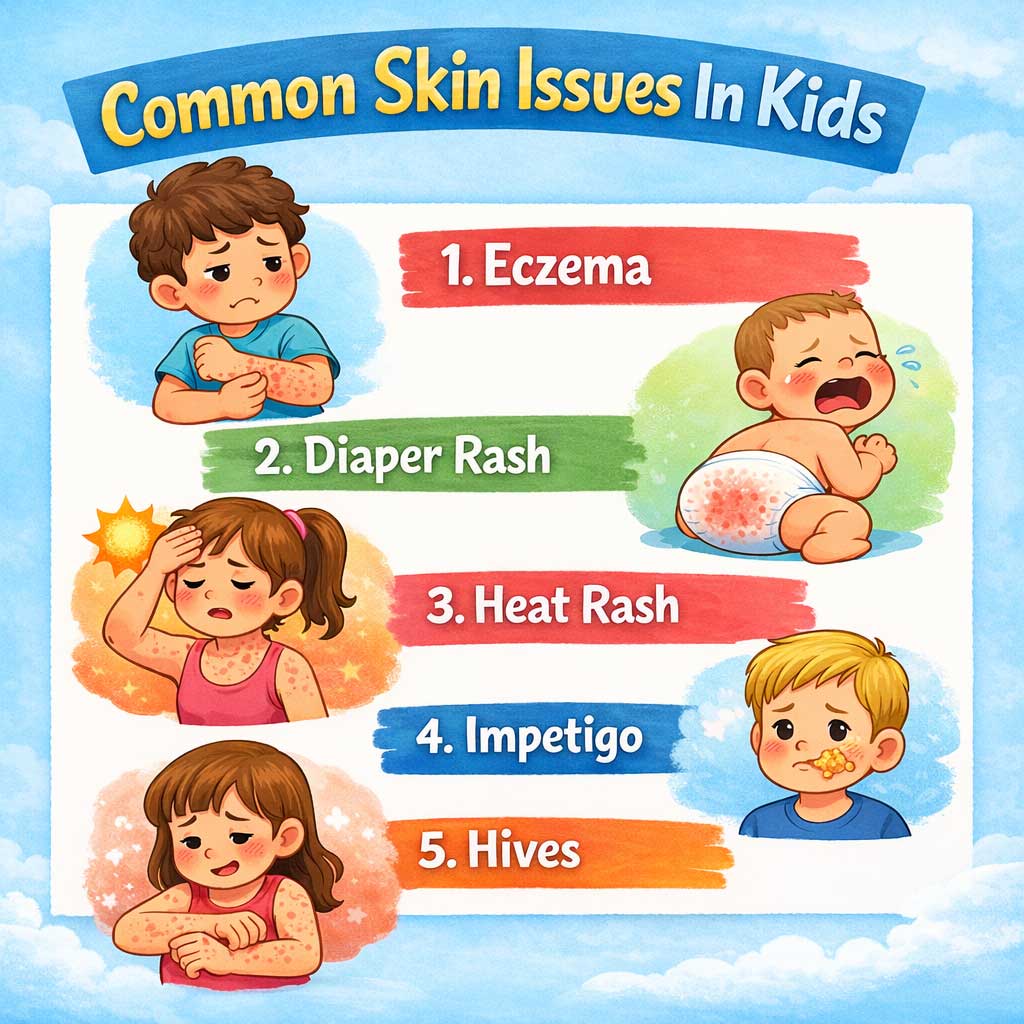
Check out this guide to 5 common skin issues in kids and causes.
Skin Issue #1: Eczema (also called Atopic Dermatitis)
Eczema is the most common chronic skin condition in kids, often appearing in infancy or toddlerhood. It manifests as red, itchy, and dry patches of skin, typically in the crooks of the elbows, behind the knees, or on the cheeks.
- Cause
Eczema is primarily caused by a genetic skin barrier defect. Essentially, the skin is leaky and cannot retain moisture or protect itself from irritants.
- Common Triggers
While genetics lay the groundwork, environmental factors like wool fabrics, harsh soaps, pet dander, or some weather changes that can cause flare-up. In some cases, food allergies can exacerbate the condition, though they are rarely the sole cause.
Skin Issue #2: Diaper Rash (also called as Irritant Diaper Dermatitis)
Almost every baby will experience diaper rash at some point. It is characterized by red, puffy skin in the diaper area that feels warm to the touch.
- Cause
The primary cause is prolonged exposure to moisture and friction. Urine and stool change the pH of the skin, making it more susceptible to breakdown.
- Secondary Causes
Sometimes, a simple diaper rash can turn into a yeast infection. If your rash is bright red with small spots outside the main area, yeast is likely the culprit, often triggered by recent antibiotic use or any trapped heat.
Skin Issue #3 Heat Rash (also called as Miliaria)
Heat Rash, commonly known as Prickly Heat. This is a frequent visitor during summer months or in overly bundled infants. It appears as tiny, clear, or red bumps that can look like a cluster of small pimples or blisters.
- Cause
Heat rash occurs when sweat ducts become blocked. Instead of evaporating, sweat gets trapped under the skin, leading to inflammation and those characteristic prickly bumps.
- Common Triggers
Hot, humid weather is the main culprit, but it can also happen in winter if a child is dressed in too many layers or has a high fever. Because babies have underdeveloped sweat glands, they are the most susceptible, especially in skin folds like the neck, armpits, and diaper area.
Skin Issue #4: Impetigo
If you notice honey-colored, crusty sores around your child’s nose or mouth, it’s likely impetigo. This is a highly contagious bacterial infection that is very common in school-aged kids or preschool kids and toddlers.
- Cause
It is caused by Staphylococcus aureus (staph) or Streptococcus (strep) bacteria.
- How It Spreads
These bacteria enter the skin through small breaks, such as an insect bite, a scratch, or a patch of eczema. Because it spreads through direct contact or sharing towels and toys, it tends to tear through classrooms and daycares quickly.
Skin Issue #5: Hives (also called as Urticaria)
Hives are distinct from other rashes because they appear as wheals; raised, itchy, red or skin-colored welts that blanch (turn white) when pressed. They can appear anywhere on the body and often shift locations rapidly.
- Cause
Hives are a systemic response. They occur when the body’s immune system releases histamine into the bloodstream, causing tiny blood vessels to leak fluid under the skin.
- Common Triggers
While many parents assume skin allergies are always because of food or a new detergent, the most common cause in children is actually a viral infection. A simple cold or stomach bug can trigger a breakout of hives that lasts for a few days.
Conclusion
A child’s skin is a work in progress, constantly adapting to the world around it. By identifying the causes whether they be viral, bacterial, or environmental, you can better protect their skin and keep them comfortable.